
Posts filed under: Marlyn

Writing a memoir for family

When I speak to groups I often suggest that folks write a memoir for family and friends.

To view my memoir take a look here

OK, so you might be saying, “I’m not a writer” or “I don’t know what to say. Why should I consider doing a memoir? Who would publish it?”

Good questions. But remember, what you don’t write down for those you care about to see may be forever lost. Too often when we gather for family occasions ideas you might want remembered don’t get talked about.

So you may say, “I’m not important enough to write a memoir.” But you ARE important to those who love you, who care about you. When I wrote my memoir during the pandemic I had time on my hands to think about writing one. And, I thought, telling multiple stories of my life frankly might be of interest to family members after I’m gone and they want to remember me. I never thought it would ever be published. After all, the only name recognition I really have is on signs that appear on the front of certain office supply stores!

I suggest that folks begin by sitting in a quiet place and thinking about your life. Is there a theme to your life story? What stands out? How do you want to be remembered? What stories might you share by writing them down in a way you might never converse about during your daily life routine?

Here’s a funny anecdote from my life. I’ll bet you have one too to include in your story.

One of my first summer jobs was working for my hometown newspaper in Melrose, MA, a little suburb outside of Boston. My mother knew the editor, and so I was hired. I wrote obituaries, playground news, and I pored through wedding forms brides and grooms would fill out for me to write a news story for the weekly paper following their weekend marriage ceremony.

The last day of work, the matronly editor of the paper asked if I would drive the newspaper’s panel truck about nine miles into Boston to pick up some rolls of newsprint. I had just gotten my driver’s license. I had never driven a large panel truck before. I remember the editor, Dorothy Raymond, patting my shoulder as she said, “You can do this…”

Getting in the truck and starting it was the last uneventful thing that happened on the trip to Boston. On the way from the parking lot I steered too close to a corner of the building, sheered off the side mirror and listened to it crash in the driveway. I decided to just keep going.

Next, I needed to cross the Mystic River toll bridge. Unfortunately I did not maneuver the the narrow drive entrance to the toll booth successfully. Rather, I drove the vehicle over the left curb. Horrified, I was heading toward the toll booth itself. I can still picture how the collector ran for his life out the booth side door. Fortunately, I was able to maneuver the truck back onto the drive entrance. I nervously handed him the toll money. We were both really sweating.

Next stop, Clarendon Street at the newsprint warehouse. I backed the vehicle too close to the loading dock, slightly damaging the rear doors. The warehouse foreman came to the driver’s side window and said sarcastically. “Do you want to load newsprint rolls into the truck? If so you are going to have to pull forward.”

The rest of the trip proceeded uneventfully. As I drove into the parking lot of the newspaper, I noticed someone had cleaned up the side view mirror mishap.

Ms. Raymond was very nice to me. “Don’t worry,” she said, “we can fix the truck. I’m glad nothing happened to YOU.”

I wonder what my mother and Ms. Raymond talked about after the truck incident. Or if they hired an intern the next summer.

Suggestion. Think about sitting in a quiet place each day. Think about the stories and events of your life you want to leave behind as a legacy to your family and friends. Make a list. When you are ready, begin to put your story together. Take a little time each day to develop your ideas. Don’t worry about how long it takes, but be disciplined. I like to write in the morning. I sometimes spend an hour or two at it before thinking about breakfast. Storyworth, a new initiative, can help you with a memoir. They send out weekly questions for would-be memoir writers to answer. But you can do the kind of self-storytelling on your own. Honest.

Sometimes reading the stories of others in a memoir they produce may inspire you. But don’t worry if lack of fame is a concern of yours. Remember, every life matters. Especially yours. Write me if you have concerns or questions. I’d be glad to chat with you electronically.
Why Bronson’s story matters

Why Bronson’s story matters

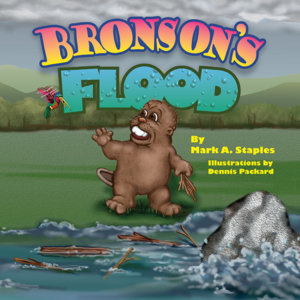
Bronson Flood's book cover features an illustration by Dennis Packard.

Bronson’s Flood book cover features an illustration by Dennis Packard.


Bronson’s Flood is the story about how a beaver in the Wide Woods works with his friends to spare his neighborhood from a flash flood.

In the process he discovers his special gifts and how to use them to make a difference while teaming with others.

The idea for Bronson’s Flood originated about 20 years ago, when my wife, Lynn, and I enjoyed camping at Beaver Valley Campground in picturesque Upper Black Eddy in Pennsylvania’s Bucks County. Watching the wildlife surrounding our trailer started my thinking. At the same time, I was working as a long-term flood recovery volunteer along the Delaware River in the community of Raubsville, not far from the campground. 

A group of church volunteers including Lutheran seminarians, members of Trinity Lutheran Church in Lansdale, our home congregation, and the Rev. William Rex, then a pastor in nearby Ferndale, practiced mucking out and home repairs in the wake of tropical storms. It was exhausting but rewarding work as the residents we served in Williams Township were elderly and living along the river in simple bungalows. They really needed us. We restored the home of Ike Repsher, a retired letter carrier, and his spouse, Helen, a potter. During many years in their simple dwelling, they had never-before experienced destructive flooding. We held a simple service, led by Bill, to bless their restored house. Tragically, a year later, flooding recurred, compromising their dwelling to the point where they decided to abandon the house they had known for decades and relocate across Route 611. 

Subsequently in 2005 and 2006, Lynn and I volunteered to help survivors of Hurricane Katrina in Mississippi. I worked with recovery crews in the company of Trinity volunteers. On a trip Lynn and I made together, she plied her nursing trade by volunteering in a Biloxi, MS, clinic. Along the way I interviewed and told the stories of several young AmeriCorps workers devoting months of their lives to the recovery.

The stories I heard and told from my recovery experiences contributed much to how I went about writing Bronson’s Flood for children.

In addition to depicting the wildlife I had encountered while camping, I wanted to give children a glimpse of how human creatures often work together to overcome natural calamities like flooding. I also want them to discover their gifts just the way Bronson did. 

Julia Frank, a coordinator across Pennsylvania with Lutheran Disaster Response, also inspired the book. A portion from the income we get from Bronson’s Flood sales, are passed on to the work Julia so ably leads. A few years ago, I worked with John Kahler, a partner in our Marlyn Publishing venture, to develop a video about work Julia coordinated after flooding impacted Eastwick, a community near Philadelphia International Airport.

Julia provided us with critical disaster preparation advice for parents, grandparents and children who engage with Bronson’s story. It is found at the book’s end. In addition, both Julia and Pastor Rex play key roles along with others, in the audiobook version of Bronson’s story. Julia is Mayor Hannah and Bill is Garth Grizzly. We had a lot of fun recording the audiobook. Paperback, e-book and the audiobook versions of Bronson, all available in Amazon. 

When I read Bronson’s story to preschool children, I like to tell them we are all part of God’s humongous global people puzzle. No one is excluded. Everybody’s piece is critical. Everyone’s gifts are needed or else the puzzle is not complete. I urge all the children I meet to work with others to discover their special gifts and use them for the betterment of others around them. In turn, they will benefit from the gifts of others. Ideally, everyone contributes to the common good.

Perhaps Eli Weinrich, age 11, son of the Beaver Valley Campground owners Greg and Jennifer Weinrich, said it best when he told me what he thought after reading Bronson’s Flood, brilliantly illustrated by Dennis Packard. 

“I really like the way all the animals in the book worked together,” Eli told me. Amen.

Bronson ‘sponsors’

Bronson ‘sponsors’

Bronson Sponsors

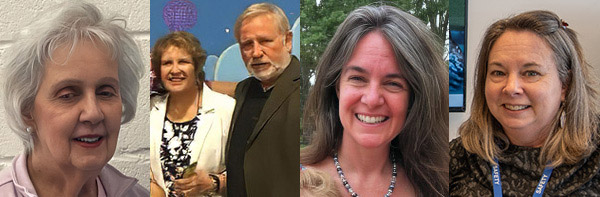
Sponsors L to R: Carole Rasmussen, Roger and Linda Williams, Jeannine Fallon Anckaitis, Julia Frank

Carole Rasmussen bought 39 copies for Preschool at Trinity Lansdale.

Roger and Linda Williams bought four books for children attending 10:45 a.m. “Sermon on the Steps” at Trinity, March 23, 2025.

Jeannine Fallon Anckaitis of Swarthmore bought 15 copies of Bronson for children in her youth networks. Jeannine is executive director at Youth Development United and Chester Upland Youth Soccer and claims the author as a mentor.

Julia Frank bought 20 books for her Lutheran Disaster Response network.

Thank you, sponsors!

12