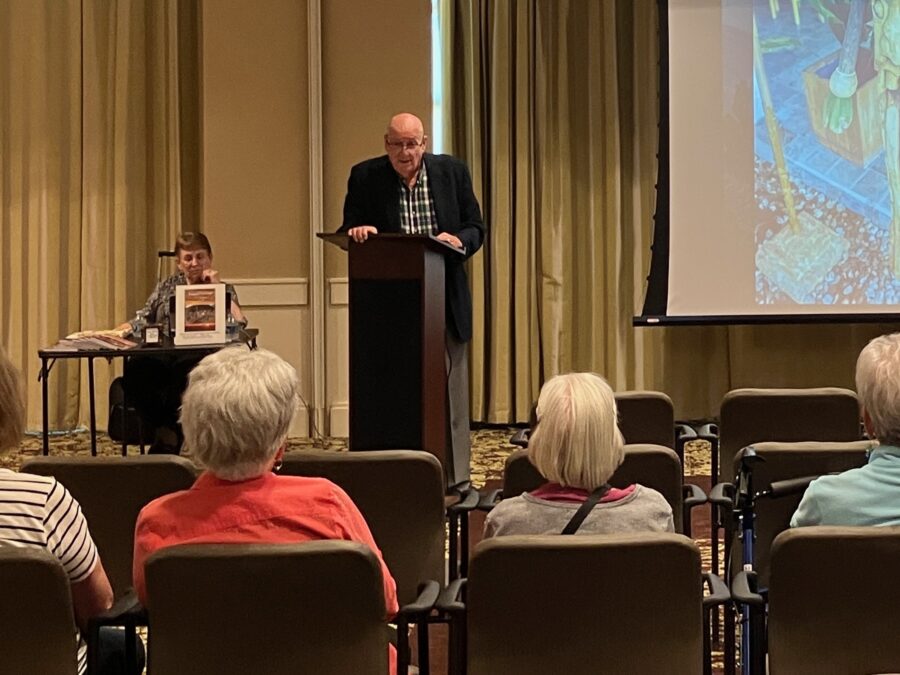
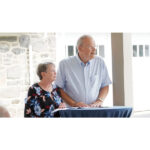
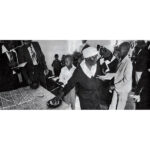
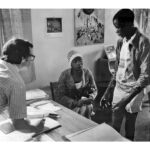
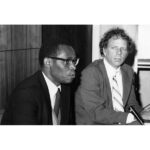
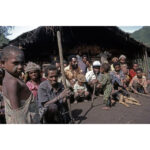
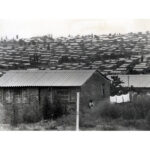
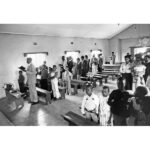
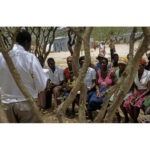
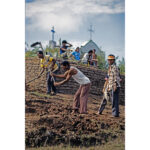
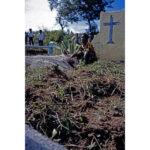
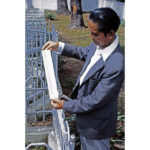
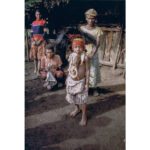
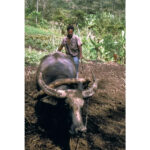
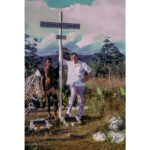
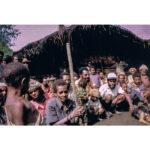
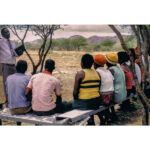
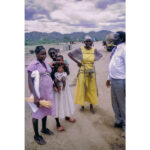
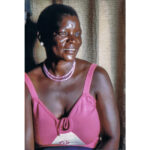
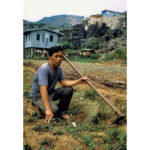
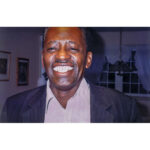
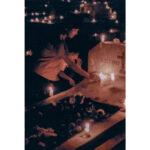
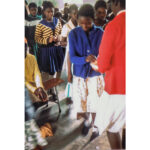
Mark spoke Oct. 13 about his first book “Neighbors Revisited” before a group at the Lutheran Community at Telford. He shared life lessons learned from photojournalistic visits to places in Africa and Asia. The lessons he described include generosity (Soweto), resilience (Zimbabwe), and the gratitude for freedom he observed in what were once new democracies (Papua New Guinea and Zimbabwe). Lutheran Community at Telford Photo by Nicole Brennan.

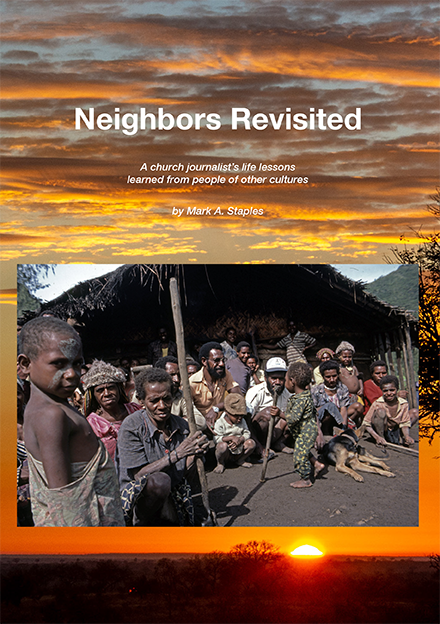
Author: Mark A. Staples
Photographers: John Kahler, Mark A. Staples, Keith Clemens, Fran Held
Neighbors Revisited: A church journalist’s life lessons learned from people of other cultures
Purchase Neighbors Revisited on Amazon
available in paperback and as a Kindle book
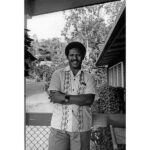
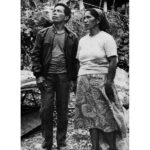
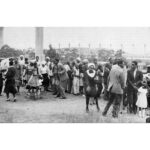
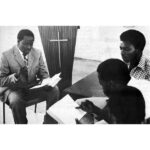
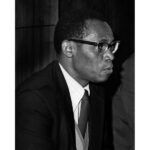
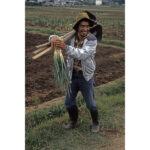
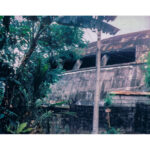
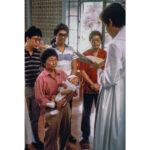
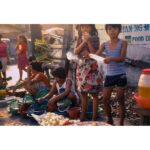
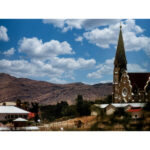
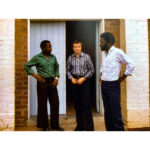
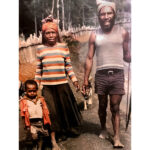
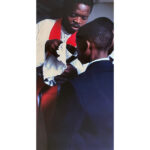
Neighbors Revisited: A church journalist’s life lessons learned from people of other cultures describes the author’s life lessons learned from people of other cultures during travels to six countries in Africa and Asia from 1981 to 1985. The six nations visited in Africa are South Africa (including visiting Soweto illegally during apartheid), Namibia, and Zimbabwe immediately after independence, and in Asia the Philippines, Papua New Guinea (10 years after attaining independence) and Northern Sumatra in Indonesia where the author celebrated Easter in ways he could not have imagined. The countries visited were on assignment for The Lutheran, magazine of the Lutheran Church in America, a national periodical with about 500,000 readers. The life lessons learned happened in places readers in the United States may not have visited. Two of those places featured stories of people striving to establish new democracies after enduring colonialism.
The author encountered many holy surprises along the way as people of faith welcomed a stranger in ways that changed the author’s life. Of particular value was discovering how believers in cultures unfamiliar to the author observed their Christian faith in extremely trying times. The author believes those lessons and experiences, though decades old, have relevance to U.S. readers today in challenging times of our own where Americans for a variety of reasons have sometimes been isolated from other cultures and who themselves are dealing with questions of democracy in a highly polarized time.



What our Readers Say
“The author answers the question Who Is My Neighbor? in six riveting picture-perfect stories.”
The Rev. Philip D. Krey, Ph.D.
Professor Emeritus, Early Church History, United Lutheran Seminary in Pennsylvania
“This book highlights the value of meeting distant neighbors and seeing the world through their cultural lenses.”
Richard Detwiler
Retired Spanish language teacher and community services worker
“Neighbors Revisited tells stories of how people of faith from other cultures are challenged by and also challenge worldly powers. The stories reminded me of what Jesus faced in the Passion narratives.”
Dawn Stewart
Christian Educator
“The author depicts the human side of war, poverty and suffering and enables people to tell their own stories in a way that goes beyond the newscasts I recall.”
The Rev. Nelson T. Strobert, Ph.D.
Professor Emeritus in Religious Education, United Lutheran Seminary, Pennsylvania
Neighbors in the Marlyn Blog
The Unifying Power of Music
 Most of you know about my background in photojournalism explained elsewhere on this site.
I remain a news junkie, but when the daily reports about divisiveness, featuring strident criticisms of diversity equity and inclusion (DEI) abound too disagreeably for me, I turn to music. These days that happens often.
I tried to celebrate those DEI qualities in my book Neighbors Revisited anyway. The book, which you can obtain through this website, is the best way I’ve had as a writer to disparage critics of DEI and celebrate the values of people who don’t look like me and what they have to offer to our world. Without those folks I’ve met along the way in my reporting and photography, the world would be a much lesser place. Back to music. I enjoy jazz and classical music. Sometimes I find humor in it. An imaginative jazz pianist and lyricist, Mose Allison, once wrote a song with the title, “I don’t worry about anything, because I know nothing is going to be alright.” The song gives me a laugh, gallows-like.
Mostly I watch a lot of classical performances on YouTube. A favorite symphony of mine is Number One by Johannes Brahms. A favorite version involves the Radio Orchestra of Frankfurt under the direction of Andres Orozco Estrada, a native of Medellin, Colombia, and now a celebrated violinist and musical director with energy and spirit that abounds.
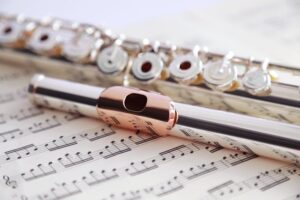
Many aspects of this symphony performed so inspirationally move me deeply. First, and those of you familiar with it already know about this, there is the moment in the fourth movement when, musically, the clouds part and the sun peeks through in the form of a French horn solo and the flute and other instruments that unforgettably follow. I know when that groundbreaking solo is coming, but, still, it gets me every time, and I weep through it. It tells me musically that truly everything is going to be OK (unlike the Mose Allison lyric the jazz pianist does so tongue in cheek). And I take deep heart in the gift of that sound so eloquent. It speaks profoundly to the deepest part of my God-given soul.
Then there are the performers themselves. I’ve heard and seen them now in many performances, one being Igor Stravinsky’s “The Rite of Spring.” It is an inclusive group featuring in one performance a Black flautist, Filipino and other Asian violinists. They are so beautifully rehearsed, all pulling and working together the same way to give voice to a supremely gifted German composer. It is the essence of what I tried to capture in Neighbors Revisited, that when we celebrate each other despite our differences and blend our talents and ideas the world becomes a better place, sometimes only for a moment.
Toward the end of the Brahms Symphony the camera captures a fleeting glance and smile from the renowned Spanish-born flautist Clara Andrada toward the gifted Black flautist beside her, London, England-born Matthew J. Higham. The moment briefly acknowledges the musical journey they have shared. Wonderful.
Praise be to God for the gift of experiences like this. Music to my ears and beyond.
The trouble with being ‘myopic’
My training as a journalist from the time I was in my twenties has taught me much about the limitations of human perspective. It has also taught me to examine viewpoints from all sides. That can be a challenge to do in such a polarized time. But I try. We are all human and have limits of knowledge and understanding, though. Reformer Martin Luther once taught that we all fall short of what God wants us to be.
I am grateful to have done research and reporting in a dozen countries and 30 U.S. states. I once worked 10 years as a volunteer shipboard visitor with Homeland Security credentials. During that time, I regularly went to dozens of highly secure terminals to greet seafarers from all over the world in the Port of Philadelphia. They and the hard work they did to bring us “stuff” we need really inspired me and helped my perspective. I am grateful to Seamen’s Church Institute of Philadelphia and South Jersey for that opportunity.
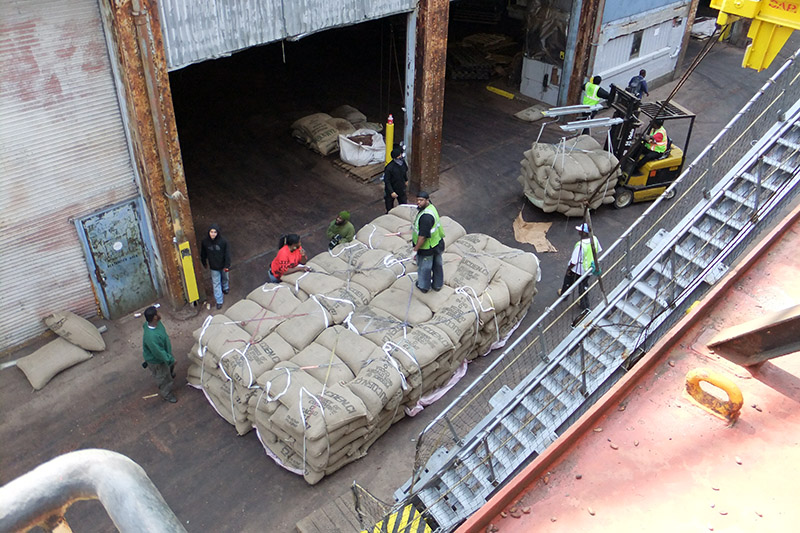
Dockworkers offload bags of cocoa beans from the cargo ship Lady Anthula in 2012.
I watched cargo ships offload materials like fertilizer, rock salt, asphalt, cocoa beans and Kia automobiles from all over the world. Philadelphia has been the largest importer of Chilean grapes. Ships bearing bananas for the Philadelphia region are commonplace. No wonder. My research indicates the U.S. is the largest consumer of bananas in the world. They are grown in the U.S., but the largest purveyors of the fruit are Honduras, Costa Rica, Guatemala, Ecuador and Mexico. Favorable climate seems to be a factor for their leadership. We consume everyone’s bananas! Cocoa beans, used to manufacture a variety of U.S. chocolate products, arrive in the Port of Philadelphia regularly. The largest grower of cocoa beans is the Ivory Coast in Africa. (Yes, some cocoa beans of high quality are made in Hawaii. And that is wonderful!) Why are most cocoa beans in the world grown in the Ivory Coast and Ghana and not in the U.S.? I’ve learned that’s because the climate in those countries highly favors such production.
Kia cars have a U.S. production site in Georgia. But the cars or parts included in them are manufactured in Pakistan, South Korea (company headquarters), China, India, Slovakia, Mexico, Japan and Vietnam.
Research has informed me that in the U.S. rock salt is mined in Livingston, NY, Texas and Michigan. In March of 2013, a ship I visited at the Riverside Terminal in the Port of Philadelphia brought us Rock Salt from Brazil. That ship was one of 13 to visit the Port, as I recall, because of the unusually harsh winter. Municipal trucks were lined up at Riverside to get the salt, offloaded through large funnels onto a conveyer belt to reach the trucks. Why was rock salt imported from a place like Brazil instead of being furnished out of Livingston or Grand Saline, TX? I learned it was likely because the demand imposed by a harsh winter outstripped the capacity of the U.S. to produce enough salt on its own. Price was possibly a factor as well.
The iPhone I carry in my pocket has components or manufacturing involving 63 countries including the U.S., according to Columnist Tom Friedman of the New York Times.
Why write about all this? 1.) My experience as a journalist and in visiting seafarers in the Philadelphia Port has taught me that the world and its economy is a complicated, exciting place full of people who are striving to work together. That’s such good news! 2.) Historically I have found the world to be remarkably diverse, filled with people who are sometimes different from me, but from whom I can learn a great deal. 3.) I have always thought the reality that we are globally interdependent, neighbors serving and being served by neighbors, is something to celebrate. (I don’t believe all those countries are “ripping us off.”) Check out my book Neighbors Revisited, available through this web site, to get my thoughts.
Now it feels like the world view I have learned to embrace is often scorned and thrust aside. Is being myopic and ingrown becoming the new value?