Posts filed under: Reflections

Hormuz Heartache Addendum

I continue to speak to groups about my newest book, Pedro’s Delivery, (Pink Umbrella Books, 2026). Increasingly folks will ask me about the plight of commercial ship seafarers, so many of them Filipino, in the Strait of Hormuz. My heart is heavy as I think about the wartime conditions on the waters near Iran.

First, I am struck by the number of folks I encounter who haven’t even heard of the Strait of Hormuz. Not everyone follows the news. And I understand how busy folks are these days. But never heard of it?

I now subscribe to the “Strait of Hormuz Updates” compiled weekly by the International Christian Maritime Association. (subscribe here) It comes with a note from Jason Zuidema, who oversees the North American Maritime Ministry Association, the group I made remarks to about my book Aug. 4 during their convention in Philadelphia.

I like the updates so much because the compilation relies on multiple sources.

Jason noted Sept. 10 that the Gulf conflict was intensifying at his writing. Iran launched missiles at U.S. warships and forces in Jordan. The U.S. responded by destroying eight Iranian oil tankers. Commercial traffic through the strait has not stopped but is limited. In short, the war is not over and appears to have no end in sight.

I won’t cite all the sources here, but a paragraph from UN News cited in Jason’s update especially caught my attention:

Ships and seafarers increasingly caught in the crossfire of unrelated wars

“Four regions – the Strait of Hormuz, the Red Sea, the waters off Somalia and the Black Sea – are now simultaneously active theatres of danger, on a scale the shipping industry has not seen before. Vessels and seafarers are being trapped and attacked in conflicts that have nothing to do with the ships themselves.”

At least 70 cargo ships have been attacked since the war with Iran began, and 19 seafarers have been killed. Recent statistics suggested that even though limited traffic is accessing the Strait an estimated 400 cargo ships and as many as 6,000 seafarers are in limbo nearby. Getting them on and off ships as contracts begin or expire and getting seafarers provisions when they are not in port is much more costly than usual. Shipping is getting harder to insure.

These realities should deeply concern us. I’m asking you, dear readers, to pray for the safety of innocent seafarers. They do so much for us. In addition, their plight is becoming our predicament too. Because it is getting harder for seafarers to “deliver the goods” to us, including much needed fertilizer for farmers, our costs are bound to increase dramatically in the uncertain months ahead.

You can read the original reflection Hormuz Heartache here.
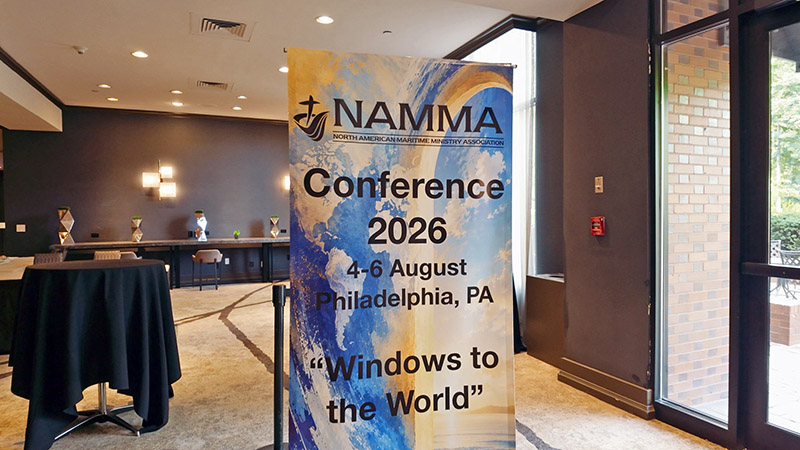
Telling Pedro’s story at the NAMMA Conference

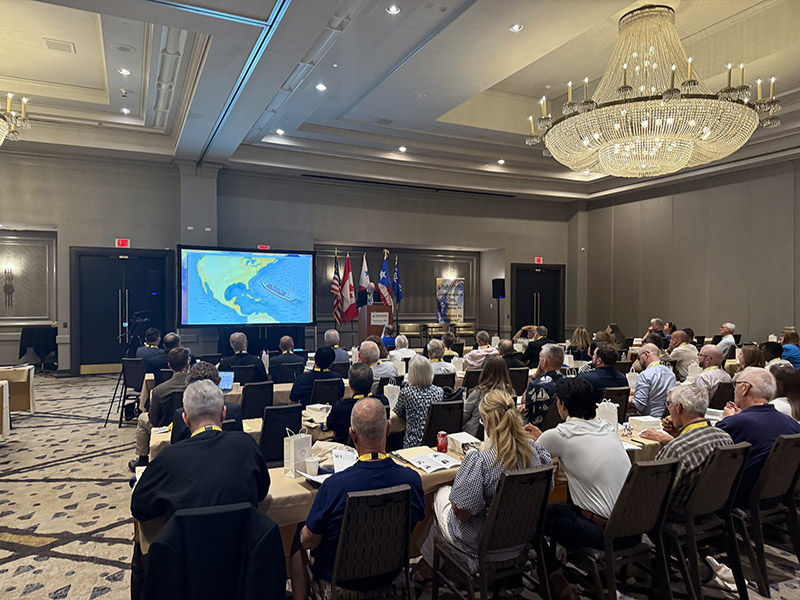
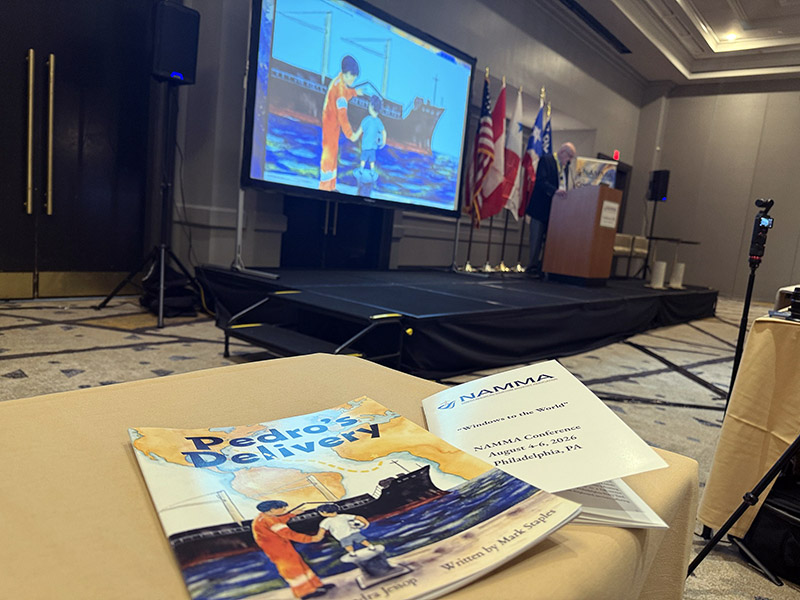
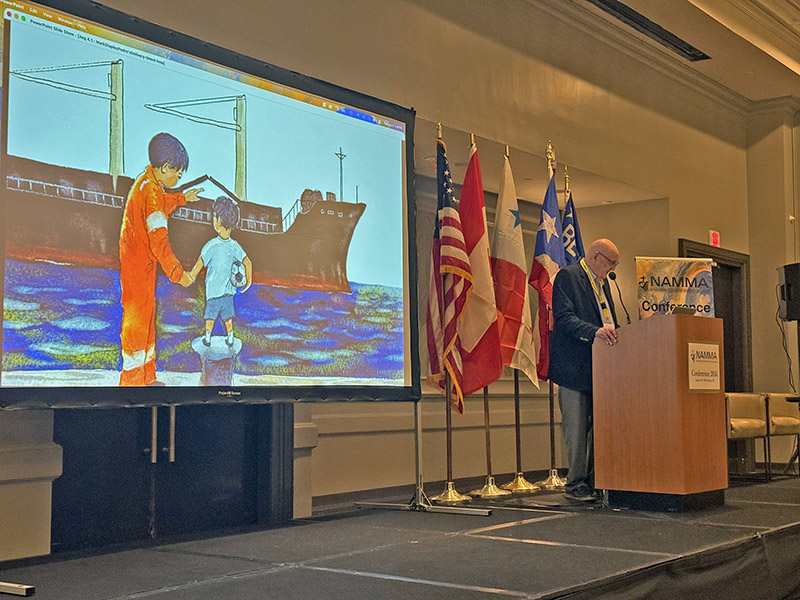
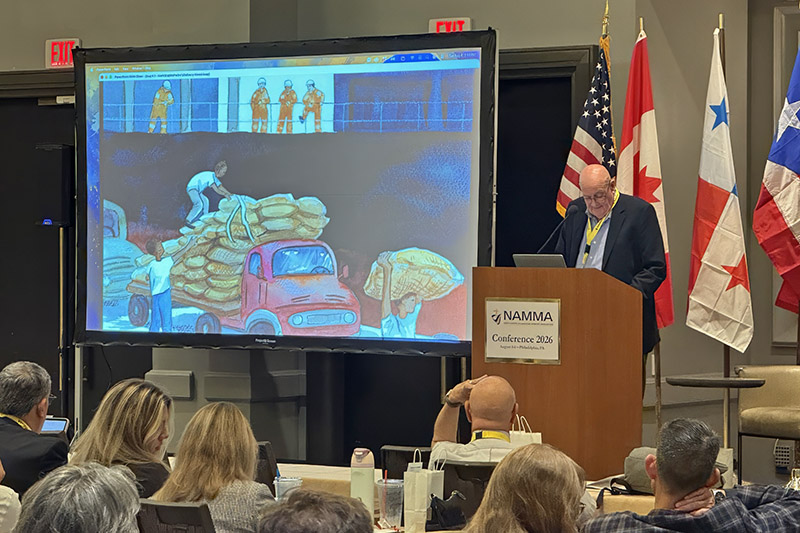
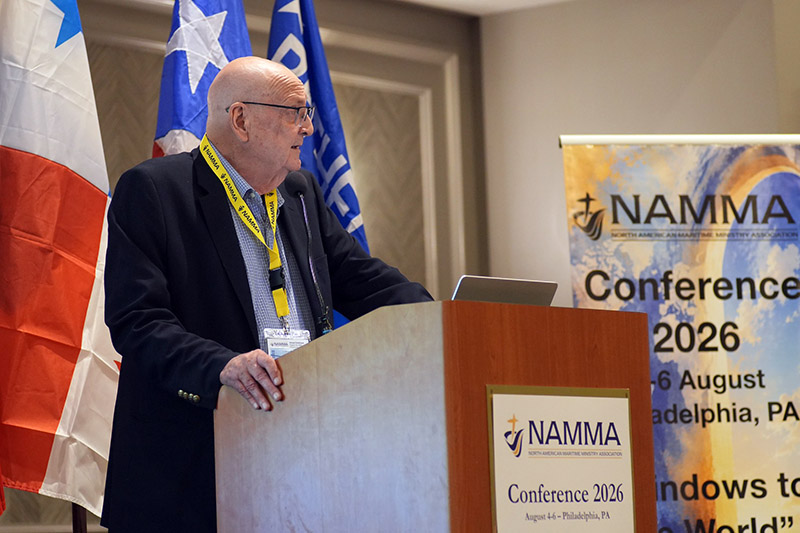
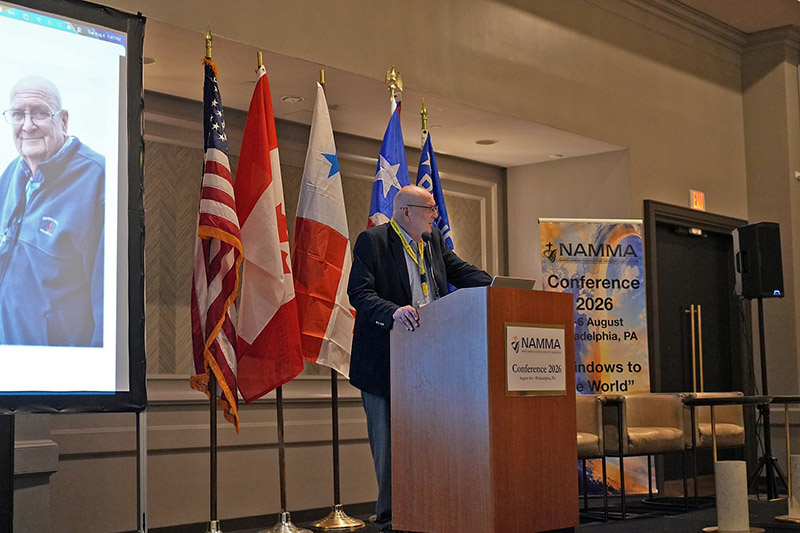
On Tuesday afternoon, August 4, I had the distinct privilege of addressing 115 shipboard visitors and chaplains from all across North America. I was a keynoter at the annual conference of NAMMA, the North American Maritime Ministry Association held at the Marriott Hotel in Old City Philadelphia. I described how my 10 years of experience visiting hundreds of ships and their crews in the Port of Philadelphia had changed my life and inspired the writing of Pedro’s Delivery (Pink Umbrella Books, 2026.)

We are so grateful that Jason Zuidema, who directs NAMMA, invited Lynn and me to be part of this special conference, giving me the chance to talk about the journey leading to Pedro. I made all those visits as a volunteer for the venerable Seamen’s Church Institute of Philadelphia and South Jersey (SCI).

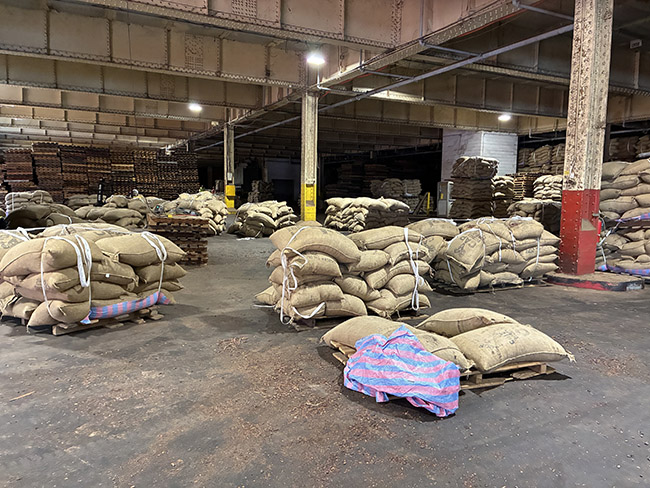
Jeff Wheeler, who has been involved in the cocoa industry in the Port for 46 years, was so taken with Pedro’s Story that he donated copies of the book to all the conference attendees. Jeff began his career as a stevedore loading bags of cocoa beans on railroad cars. He now oversees the importing and distribution of beans in the Port as CEO of Dependable Distribution Services, Inc. in Pennsauken, NJ.

Because of Jeff’s generosity, conference attendees, having heard my remarks, sent me and my spouse, Lynn, a consistent message as they spoke to us. “This book does a great job educating children about what goes on behind the scenes to bring products to their store shelves.” Some said reading the story to and with their children and grandchildren will help give early readers an understanding of the importance of their ministry to seafarers.

Several said they hope to purchase multiple copies of Pedro’s story to give to those they relate to in the workplace and to family members.

Lynn and I were greatly blessed and moved to meet so many dedicated and compassionate caregiving professionals and hear their stories. It made my having written the story of Pedro so worthwhile!

Here’s the video of his talk:

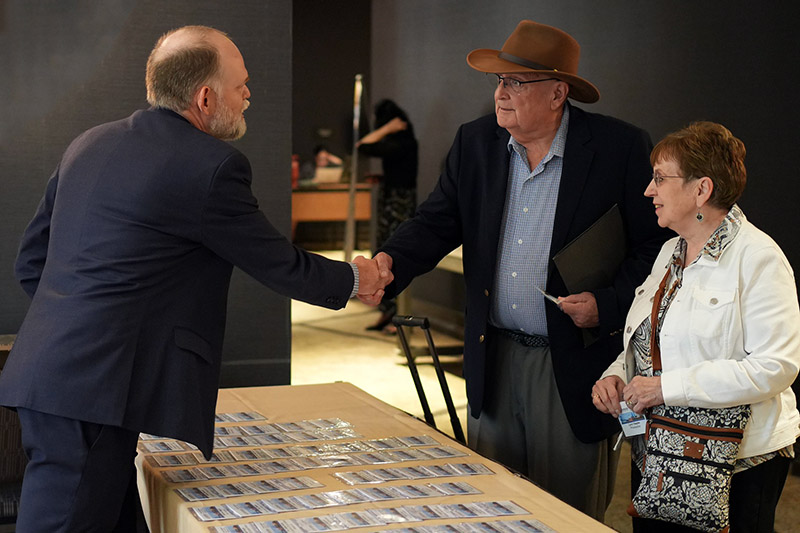
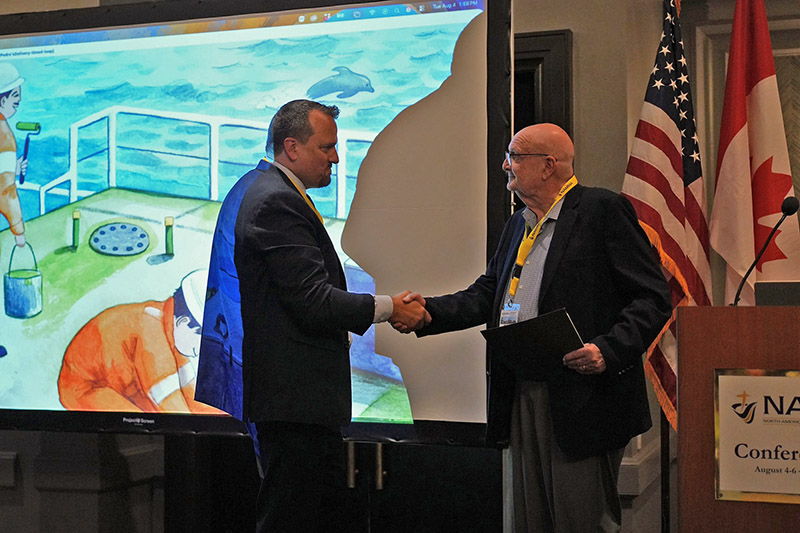
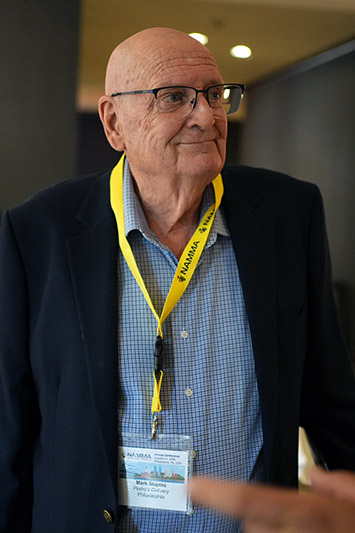
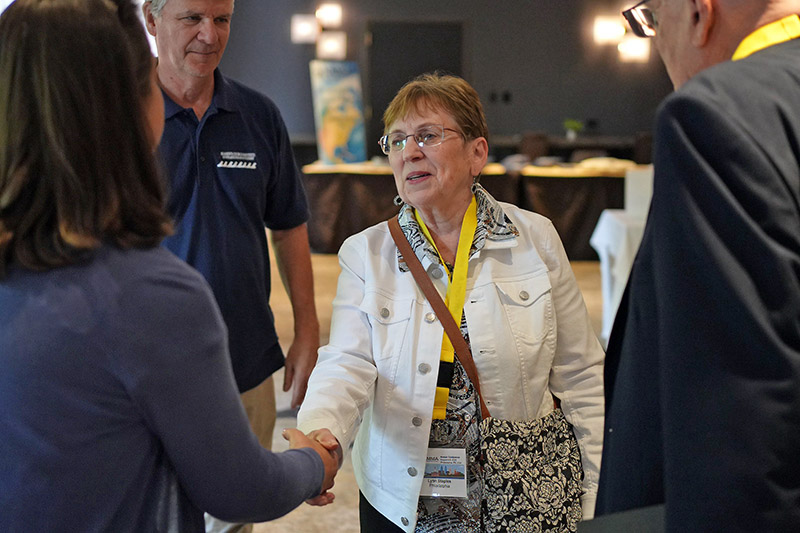
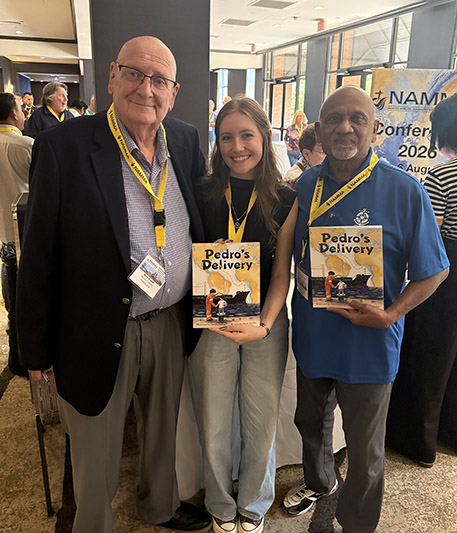
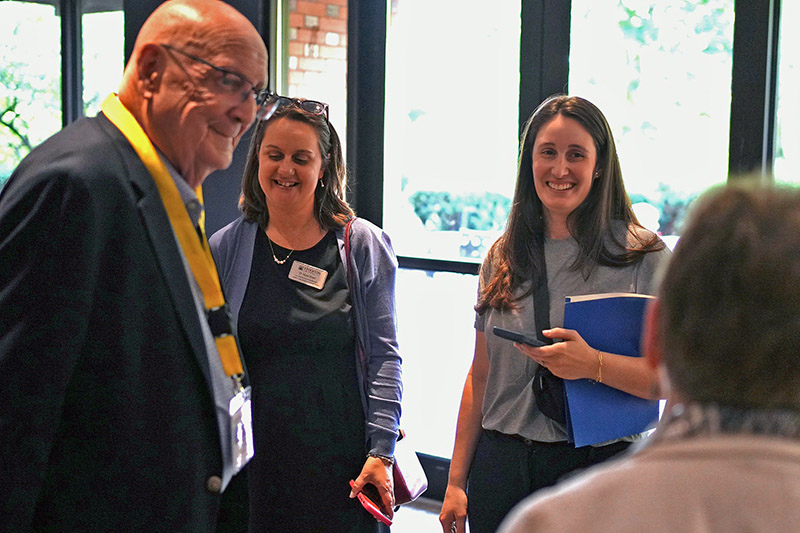
Here are some photos with Mark (and Lynn) at the event:

Images and video courtesy NAMMA

One Book, Many Prefaces

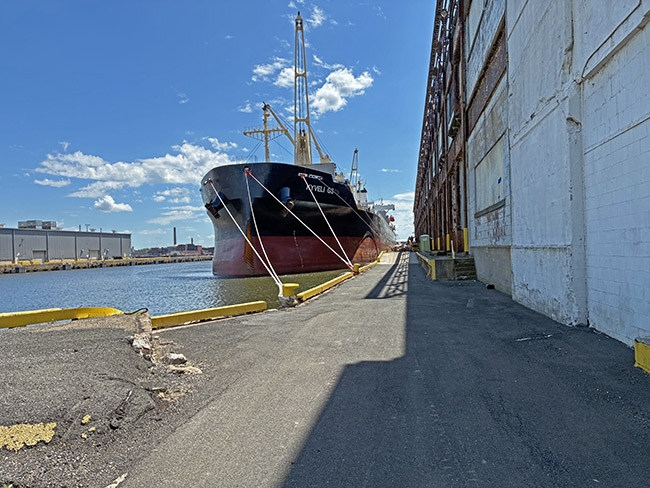
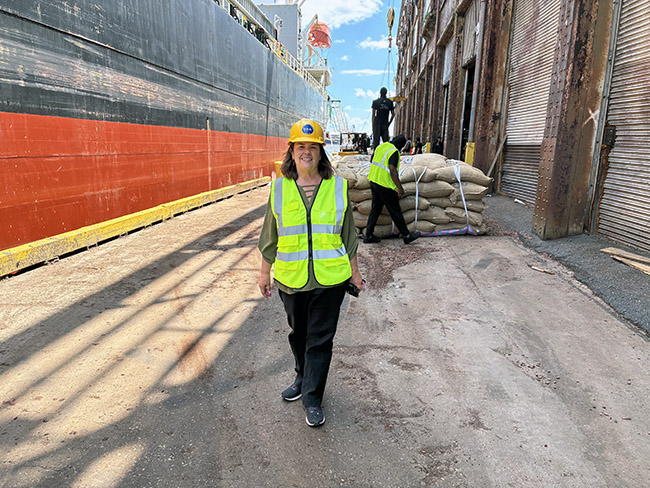
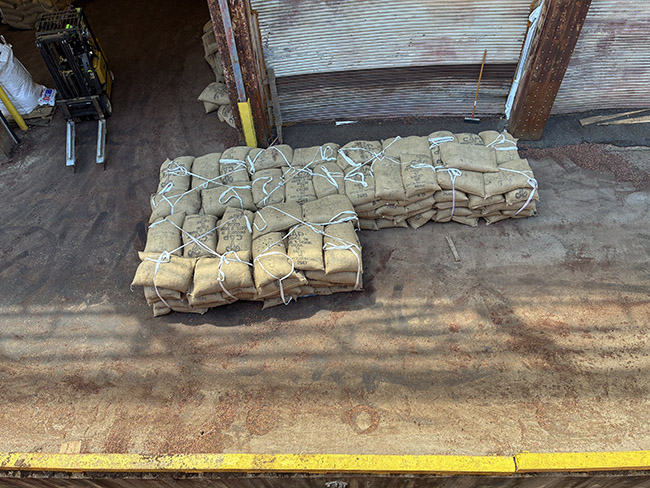
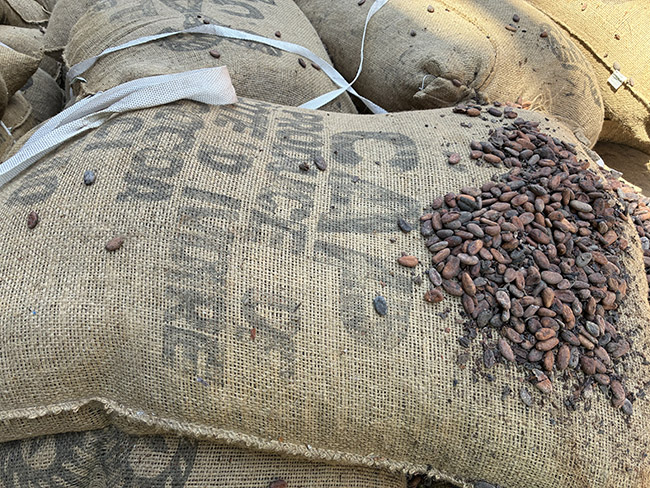
Scenes on Pier 84, Port of Philadelphia. The huge cargo ship, the Kyveli GS, was at dockside.

I’ve written elsewhere about my pending early reader children’s book Pedro’s Delivery, a fictional story based on fact about a Filipino seafarer who escorts cocoa beans from the Ivory Coast to Philadelphia and the difference mariners from often faraway places make in our daily lives.

At age 81 my life has had many blessed chapters, twists and subplots. This blog will celebrate the ones that led to this new book, which comes out in July. Maybe you have had similar unfolding stories. I believe God has breathed life into each subplot. 

About 25 years ago I worked with other Lutherans on a long-term flood recovery escapade to help mostly older residents along the banks of the Delaware River recover from the ravages of two tropical storms. That work involved me with seminarians from what was then known as The Lutheran Theological Seminary at Philadelphia (now part of United Lutheran Seminary), as well as volunteers from Trinity Lutheran Church in Lansdale, PA. Volunteering several years along the Delaware was in itself life changing. My wife, Lynn and I subsequently helped out in the aftermath of Katrina in Mississippi.

While working in Bucks County I met another volunteer, the Rev. William Rex, who was pastoring a Lutheran church in nearby Ferndale. Eventually, Bill invited me to serve with him as a shipboard visitor extending hospitality to cargo ship seafarers visiting the Port of Philadelphia. 

One ministry leads to another. I became a visitor with Homeland Security credentials affording me access to highly secure terminals in the Port of Philadelphia. That service was as an ambassador for Seamen’s Church Institute of Philadelphia and South Jersey (SCI) for 10 years.

Memories gleaned from relating to thousands of seafarers on hundreds of ships led me to write Pedro’s story. I wanted early readers to know something of how commodities get to their store shelves. I wanted them to know about the seafaring professionals who sacrifice so much to “deliver” for them.

I showed my manuscript to Helene Pierson, the CEO for SCI, a couple of years ago long after I had “retired” from climbing gangways on so many ships, sometimes writing stories about my experiences for SCI when Father Jim Von Dreele was the SCI leader. After reading it to a grandchild, Helene was enthusiastic about the “face” the story would give to many who know little, if anything about the origins of commodities we take for granted when we shop. 

She has been a vigorous supporter, helping me with author photos aboard ship in Gloucester City, NJ, early in 2026 and introducing me to Jeff Wheeler, the man who oversees the importing of cocoa beans from West Africa to the Port of Philadelphia, and the distributing from there of bags of beans as far away as Illinois and Wisconsin. In 2025 the Port of Philadelphia imported 5 million bags of cocoa beans, more than received by any other port in the U.S. Jeff himself is a remarkable story. He began as a longshoreman helping to load bags of cocoa beans on railroad cars in the Port. Today he is the chief executive of Dependable Distribution Services, Inc. in Pennsauken, NJ. Jeff has also become an advocate for Pedro’s story. “Many people don’t understand much about the people who work in international trade and what goes on behind the scenes in places like our port,” he says. “This book will really put a face on that work.”

A couple of other twists remain to relate about this Pedro journey.

I had an electronic exchange on Alignable, a sprawling electronic network for entrepreneurs, with Yvonne Kathryn Caputo, an author of adult books published with Ingenium Books of Toronto. Yvonne suggested I submit Pedro’s manuscript to that publishing house. Ingenium acquired the rights to publish the book. Unfortunately, Ingenium closed while the book was in process. Happily, Pedro was picked up by Pink Umbrella Books of San Clemente, CA. Ingenium had hired Pink Umbrella’s owner, Adrienne Quintana, to work with me and illustrator Sandra Jessop to develop the book. Thanks to Yvonne’s suggestion, Pedro’s Delivery will soon come to pass! I am deeply grateful to Adrienne and Sandra for all their hard work!

And special credit goes to John Kahler of Coatesville, PA, my long-time friend, technical specialist, photographer and publicist. He plays a major role in bringing my work to life.  John is truly a wizard! 

The final special twist in this Pedro Journey belongs to Lynn Roberts Staples, my spouse of nearly 59 years. Without her encouragement and support none of this happens.

Pedro’s main lesson is a simple global perspective I hope children will take to heart as they read. We need each other. 

Hormuz heartache

My book, Pedro’s Delivery, set for publication by Pink Umbrella Books of San Clemente, CA, in July, tells the story of a Filipino seafarer who escorts bags of cocoa beans from the Ivory Coast in West Africa to the Port of Philadelphia in the U.S.

The book puts a face for young readers on those who sacrifice to bring commodities that eventually land on our store shelves. Who doesn’t enjoy candy or a mug of hot chocolate on a cold winter’s day? A work of fiction, the story is based on my 10 years of experience relating to seafarers from myriad backgrounds while working as a volunteer shipboard visitor, furnishing hospitality to crewmembers on behalf of Seamen’s Church Institute of Philadelphia and South Jersey. 

Seafarers endure weather hardships and long periods of time away from home as linchpins in global trade exchanges that improve our lives. They visit some 360 ports in the U.S. alone along three coasts, the Mississippi River and the Great Lakes. Some 1.9 million seafarers serve on cargo ships globally.

Nowhere are the challenges facing cargo ship crews more evident these days than those aboard ships near Iran’s Strait of Hormuz. Normally 100 ships or more pass through the Strait daily bearing cargos like petroleum, coal, grains and fertilizer. In the current spring planting season, farmers depend on affordable fertilizer, much of which traverses the Strait, to generate the crops they raise. The current state of the Strait, however, is that traffic is severely restricted, according to news reports. And the degree of restriction is a day-to-day issue as Iran uses the closure as a bargaining tool to negotiate an end to the war. The Strait’s restrictions have upended much of the world’s economy.

As many as 2,000 cargo ships bearing 20,000 seafarers were recently “stuck” near the Strait. Recent reports, during a cease fire, indicated conditions were somewhat calmer for crews than was the case at the recent height of the conflict when seafarers could view overhead drones and hear the impact of heavy bombing, depending on their location. During the best days of the ceasefire open airports made it easier to transfer crew members as contracts for their work begin or end. Resumption of some hostilities have threatened to disrupt the state of relative calm for seafarers. A cargo tanker, reportedly carrying oil from Iran and allegedly struck from the air by U.S. forces, took the lives of three seafarers from India in June, according to a New York Times report. They were the first seafarer casualties from the war.

Provisions aboard ship last four to six weeks. Delivering needed goods, however, is more costly to ships at anchor than when a ship is at berth in a port, according to Jason Zuidema, the chief executive for the North American Maritime Ministry Association (NAMMA), who is among many tracking the war’s impact on seafarers. Such costs will likely sooner or later impact consumer pocketbooks, he suspects. 

Medical emergencies are always a challenge when ships are at sea. For vessels stranded near the Strait such emergencies are much harder to deal with than when a ship is in port.

Large shipping concerns are doing what they can to support their seafarer employees, according to reports. Technology aboard ships makes it easier for crewmembers to be in touch with loved ones. Some concerns offer hardship pay in the face of crews’ uncertain predicaments. But, those amenities do not ease the stress of wondering whether seafarers could soon once more be witnesses to wartime hostilities that could place them in peril. 

A different world at sea for a banana ship’s Russian/Ukrainian crew

By Mark A. Staples

PHILADELPHIA, PA (Feb. 16, 2026) — It was to be a typical photo shoot in the Port of Philadelphia, the kind a publisher requests of its authors for publicity images taken in a context befitting a future book.

I had written Pedro’s Delivery, an early reader book about the travails of a Filipino seafarer who escorts a cargo ship brimming with bags of cocoa beans from the Ivory Coast to Pennsylvania, where chocolatiers turn the beans into candy bars for store shelves. Many of us don’t think much about the details of such journeys. After 10 years serving as a Homeland Security-certified shipboard visitor to strangers on ships, I wanted children to know more about how seafarers sacrificially serve us. (I volunteered for the venerable Seamen’s Church Institute of Philadelphia and South Jersey all those years.)

Pedro’s Delivery will be released by our new publisher, Pink Umbrella Books of San Clemente, CA, in July. This story is a celebration of global partnerships and the basics of trade relationships involving myriad nations. In short, we need each other.

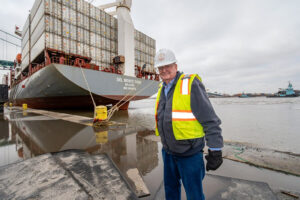
Mark on the dock with Del Monte Rose

Mark on the dock with Del Monte Rose

I was to visit the Port’s Gloucester City Fruit Terminal and the Del Monte Rose, a ship brimming with containers of bananas brought from Costa Rica and Guatemala. Soon the bananas would hit the region’s store shelves. The assignment was simple enough. My photographer, John Kahler, would take scores of photos of me. Mark with the captain, Mark with an able-bodied seaman from the Philippines – like Pedro in my book of fiction based on fact. Visuals of Mark in the busy Port. It was unusual only because as a career photojournalist and publicist, I am the one frequently taking pictures of others — until now. But simple enough.

Then I looked at the Del Monte Rose’s crew list: Vitaliy Sopin, a Russian and Master (Captain) of the ship. The next highest-ranking officers? Yevgen Ryezanov, Viacheslav Shynkarenko and Dmytro Kravtsov — all Ukrainian.

I felt the axis of my world shifting. With images of war back home daily filling our television screens, what is it like for these men on two sides of a conflict to work together for months at a time? One thing I learned, collaborations between Russian and Ukrainian seafarers aboard today’s cargo ships are not uncommon.

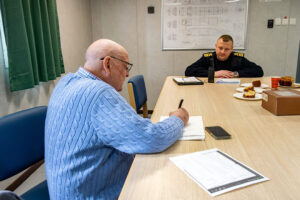
Mark and Master Vitaliy

Mark and Master Vitaliy

Master Vitaliy, 39, is a third-generation seafarer from Sochi, Russia. He is a Russian Orthodox believer with a sense of humor that flashes amid his businesslike demeanor. He does not like every aspect of seafaring, particularly the part about being away for four months at a time from his wife, Anastasiio and his children, Ihor, 8, and Juliya, 5. One of the things he relishes about seafaring is the freedom he enjoys at sea compared to life back home. Like many Russians, Vitaliy has relatives in both Russia and Ukraine, the latter of which was once part of the former Union of Soviet Socialist Republics. He also enjoys “seeing the world.” At a relatively tender age he estimates he has tied up at 30 countries.

When Russian and Ukrainian seafarers coexisted at sea as the war first began, tensions were higher than they are now., Vitaliy agrees. “Now in the ship’s daily routine, politics and religious differences are just not talked about except perhaps during some very private conversations. Tomorrow we will leave for Costa Rica and then Guatemala to pick up bananas, and we will be back here in two weeks. That is our focus.”

Chief Officer Yevgen hails from Crimea in the Ukraine. When not on duty, home for Ukrainian seafarers who want to continue their vocation need to live outside of their home country to return to their duty. Those returning home could face conscription, I learn. Most Ukrainians choose to live in Poland or Moldova with their families during home leave. As is the case with his captain, Yevgen has a wife and two young children in his adopted home. He agrees that it is all business between all the nationalities aboard the Del Monte Rose. The crew consists also of Filipinos, several of whom are able-bodied seamen like the author has described in Pedro’s Delivery.

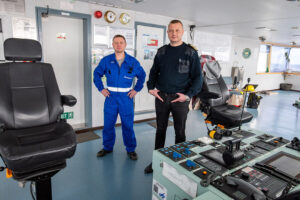
On the Bridge

On the bridge

Watching the captain and his first officer relate during a day in port there is a noticeable lack of tension between the ship’s highest-ranking officers. The camaraderie appears genuine and unforced.

Both men share the same view about the war as expressed by Master Vitaliy. “We think the fighting should stop. People should gather around a table and find a solution,” Valeriy says.

Fighting continues back home, but aboard the five-year-old Del Monte Rose it feels like a different world.

The trouble with being ‘myopic’

My training as a journalist from the time I was in my twenties has taught me much about the limitations of human perspective. It has also taught me to examine viewpoints from all sides. That can be a challenge to do in such a polarized time. But I try. We are all human and have limits of knowledge and understanding, though. Reformer Martin Luther once taught that we all fall short of what God wants us to be.

I am grateful to have done research and reporting in a dozen countries and 30 U.S. states. I once worked 10 years as a volunteer shipboard visitor with Homeland Security credentials. During that time, I regularly went to dozens of highly secure terminals to greet seafarers from all over the world in the Port of Philadelphia. They and the hard work they did to bring us “stuff” we need really inspired me and helped my perspective. I am grateful to Seamen’s Church Institute of Philadelphia and South Jersey for that opportunity.

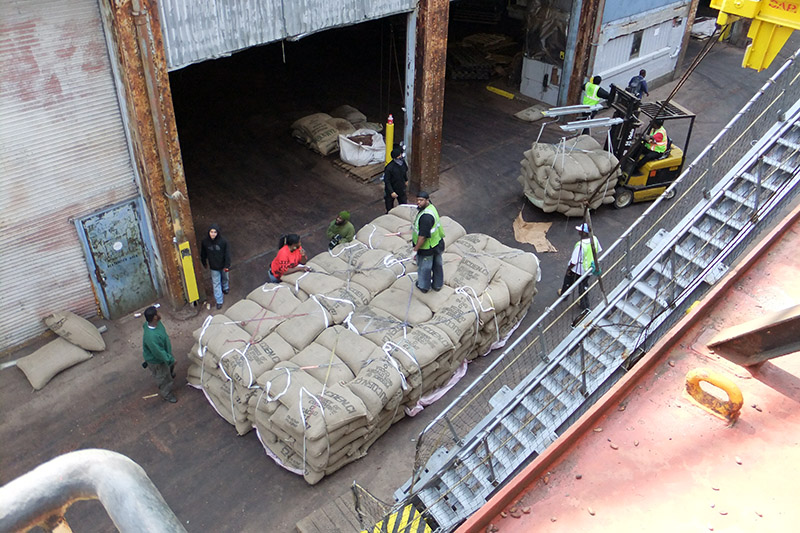
Lady Anthula crew offloading cargo

Dockworkers offload bags of cocoa beans from the cargo ship Lady Anthula in 2012.

I watched cargo ships offload materials like fertilizer, rock salt, asphalt, cocoa beans and Kia automobiles from all over the world. Philadelphia has been the largest importer of Chilean grapes. Ships bearing bananas for the Philadelphia region are commonplace. No wonder. My research indicates the U.S. is the largest consumer of bananas in the world. They are grown in the U.S., but the largest purveyors of the fruit are Honduras, Costa Rica, Guatemala, Ecuador and Mexico. Favorable climate seems to be a factor for their leadership. We consume everyone’s bananas! Cocoa beans, used to manufacture a variety of U.S. chocolate products, arrive in the Port of Philadelphia regularly. The largest grower of cocoa beans is the Ivory Coast in Africa. (Yes, some cocoa beans of high quality are made in Hawaii. And that is wonderful!) Why are most cocoa beans in the world grown in the Ivory Coast and Ghana and not in the U.S.? I’ve learned that’s because the climate in those countries highly favors such production.

Kia cars have a U.S. production site in Georgia. But  the cars or parts included in them are manufactured in Pakistan, South Korea (company headquarters), China, India, Slovakia, Mexico, Japan and Vietnam.

Research has informed me that in the U.S. rock salt is mined in Livingston, NY, Texas and Michigan. In March of 2013, a ship I visited at the Riverside Terminal in the Port of Philadelphia brought us Rock Salt from Brazil. That ship was one of 13 to visit the Port, as I recall, because of the unusually harsh winter. Municipal trucks were lined up at Riverside to get the salt, offloaded through large funnels onto a conveyer belt to reach the trucks. Why was rock salt imported from a place like Brazil instead of being furnished out of Livingston or Grand Saline, TX? I learned it was likely because the demand imposed by a harsh winter outstripped the capacity of the U.S. to produce enough salt on its own. Price was possibly a factor as well.

The iPhone I carry in my pocket has components or manufacturing involving 63 countries including the U.S., according to Columnist Tom Friedman of the New York Times.

Why write about all this? 1.) My experience as a journalist and in visiting seafarers in the Philadelphia Port has taught me that the world and its economy is a complicated, exciting place full of people who are striving to work together. That’s such good news! 2.) Historically I have found the world to be remarkably diverse, filled with people who are sometimes different from me, but from whom I can learn a great deal. 3.) I have always thought the reality that we are globally interdependent, neighbors serving and being served by neighbors, is something to celebrate. (I don’t believe all those countries are “ripping us off.”) Check out my book Neighbors Revisited, available through this web site, to get my thoughts.

Now it feels like the world view I have learned to embrace is often scorned and thrust aside. Is being myopic and ingrown becoming the new value?


A remarkable outcome

I’ve written probably thousands of stories and articles that have been published, starting with my days at the Call-Chronicle Newspapers in Allentown, PA, when I was first married to my wife, Lynn, of 57 years.  Articles published more recently included stories on the web written while working with American Baptist Churches USA and also writing for Living Lutheran, the periodical of the Evangelical Lutheran Church in America. Writers can produce pieces and not get any feedback from them. I think hearing back from readers personally may take place more easily in local reporting. I am not sure.

I’ll relate two occasions when I did get feedback. One occasion was beyond amusing. The second one I’ll characterize as a remarkable outcome I learned about quite by chance.

When I was a young reporter, Lynn and I moved from a walkup apartment to our first house, a small Cape Cod-style dwelling in a village called Lanark outside of Allentown. The garage needed a new roof. Being of modest means, we enlisted two friends to help me put new green shingles on the roof over the old shingles. We had two wives helping by handing shingles up to us. Much to my surprise when we drove past the house quite a few years later well after we had moved away the shingles we had installed seemed to still be in place. That amazed me.

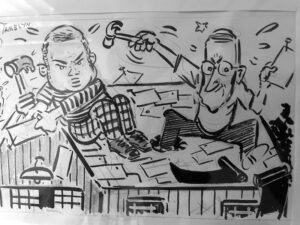
Some drinking was involved during this do-it-yourself initiative bordering at times on debacle. In short, I described a litany of mistakes we made during the effort in a self-effacing humor piece I wrote for Allentown’s Evening Chronicle. The city editor seemed to welcome these pathetic tales, such as when I tried to go through a window after locking myself out of the house. They ran with cartoons by a noted illustrator named Bud Tamblyn. The roofing piece was the first of its kind the paper had published. Readers seemed to enjoy these stories written at my own expense, perhaps because the news, even then, could be — humorless.

Bud Tamblyn’s cartoon shows the hapless roofer, right. Helping is Paul Lowe.

The next day a phone call was referred to me from the city desk. The caller identified himself as the head of the Roofers Union in the county.

“I want to thank you,” he said. “That story was the best advertisement for skilled, professional roofers the paper could have carried.” Then he concluded, “Is there any chance the story could run again next week?” I was laughing at my own expense. I had to tell him we don’t run stories like that twice.

The truly unimaginable story result happened after I wrote a piece about how newly independent Zimbabwe was recovering after a horrible war. I was on assignment for The Lutheran, magazine of the denomination known then as the Lutheran Church in America. I had never done reporting and photography out of a war zone and haven’t been to such a place since. It was 1981. I wrote how children had not been able to go to school for five years. Many schools and churches had been reduced to rubble from the conflict. The Lutheran World Federation was assisting in the rebuilding and recovery. But the truth was Zimbabwe simply had not enough classrooms, not enough books, not enough teachers and too many children wandering from place to place to find a school they could register to attend. Some children had been to four places or more, always rejected. But the sense of resilience and determination in the newly peaceful young nation was palpable.

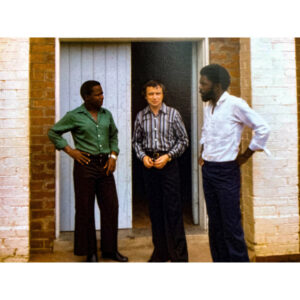
Mike Neville, center, with Zimbabwe teaching colleagues in 1981.

After the story appeared in The Lutheran (circulation nearly 300,000), I took a train from Philadelphia to New York City for a meeting. During the trip a colleague introduced me to a couple she knew, Gail Altman and Fred Noll, both teachers from downtown Philadelphia. Fred and Gail told me they were glad to meet me. They had read my story and been deeply moved by it. Now they were on their way to the church’s national headquarters to receive training to devote a year of their lives teaching children in a little Zimbabwe town called Masase that I had written about. I was flabbergasted and deeply thankful that God had empowered me to write a story producing such a result. It was truly a remarkable outcome.

A life-changing day far away

I have been blessed to work as a photojournalist in a dozen countries and 30 U.S. states. Memories abound.

For example, in anticipation of the 400th anniversary of the Augsburg Confession I visited more than a dozen sites connected with the life of Reformer Martin Luther. I crossed from West Germany to East Germany in an experience that was especially emotional.

But one day in my journalistic life stands out — so much so that I think of it almost every day. It was a pivotal factor in deciding to write my book Neighbors Revisited, a church journalist’s life lessons learned from people of other cultures.

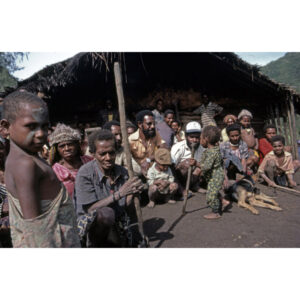
It was the 22-hour period of time when I visited a village in Papua New Guinea called Nomane in that young nation’s Central Highlands.

We live in a highly transactional culture. For example, when I used to visit a drugstore to purchase shampoo (I don’t need it anymore), I would pick up what I wanted and, often in a preoccupied state, pay for it at the checkout counter while barely noticing the cashier.

On the Papua New Guinea day in question in 1985, burdened with a heavy camera bag to take black and white color photos, I flew with a mail plane pilot in a single engine Cessna to Nomane, landing on the side of a majestic peak on a muddy airstrip.

I had plotted out my schedule over 22 hours ahead, some of which would be spent sleeping (hopefully). As a deadline-oriented writer I wanted to get a jump start, meeting the village evangelist Manape Nokul and telling the story about how, counter-culturally, he had persuaded his neighbors to move their village from high terrain (where you could be more protected from your enemies) to lower, more fertile ground especially suited for farming. I learned from a pastor who grew up in Papua New Guinea that moving was a special problem because villagers feared spirits that they believed would hang out near the river they were moving toward. In the book I titled this chapter “How faith moved a village and how a village moved me.” Years later the title still seems especially fitting.

I quickly learned from the German missionary who hosted me that jump-starts wouldn’t work in the village. “You have to spend time with the leaders first. You have to have a meal with them and let them ask you questions,” Phillip Hauenstein explained. (“But that will take so much time,”) I said to myself.

But I yielded. I ate meal of tinfish, as they called it (tuna in a can, a delicacy saved for feasts) and baked potato. The questions to me poured forth. “Where did you come from? How did you get here? What is your home like? Are there farmers where you live? What is your family like? What do you think of our village?” Around 11 p.m. the questions and answers ended. Except for one. “What would you like to do here?” they asked. I said I wanted to meet and talk to Manape. I wanted him to tell me the story of the village and talk about the faith of the villagers. I wanted to take lots of pictures. I knew they had just started farming with a water buffalo. They had only had metal tools for 40 years. Especially, I said, I would like to take a photo of the villagers together.Would all of this be OK? I asked. They all nodded.

Phillip and I said our good-byes and headed off for bed in his bungalow. It began to rain — very hard. I thought that the persistent rain might wreck my plans for the next morning. “Don’t worry,” Phillip told me. “It often rains here at night. It will be a beautiful day tomorrow.” I listened to the rainfall on the bungalow roof as I tried to sleep — fretting.

As Phillip predicted. the next morning dawned with a clear sky. We made our way to the village.

No-one was there. I panicked. What is happening? “I think I know,” Phillip mused. “Follow me.” We walked up a curvy ribbon dirt trail to the top of the village. There, positioned perfectly for a photo before a picturesque hut were all the villagers. Dear friend, you have probably taken photos where you have to arrange the subjects suitably, move them closer together, tall ones in the back etc. Especially if you are photographing a lot of people.

I needed to do nothing of the sort. They had listened to me so carefully. Everything was perfect. I took out my cameras and began to shoot. I had tears in my eyes.

The whole day went like that. The additional pictures took half the time they would have because the villagers had planned for me. Manape’s interview worked efficiently because he had heard my questions the night before.

These villagers some would describe as “primitive” were not at all transactional. Because they had come to know me so well first my assignment was easily and completely fulfilled. I had learned a special lesson about hospitality and the embracing of a total stranger. The experience changed me.

As I said good-bye to the village at 2 p.m., boarding the Cessna once more, I found myself asking “Who are the primitive people anyhow?”

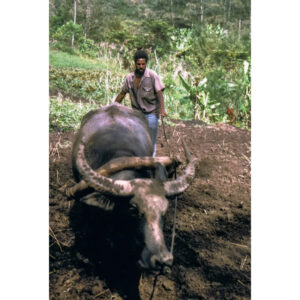
Manape plowing with a water buffalo.

The villagers were positioned perfectly for a photo.